Creating a Cozy Space with Japandi Style and Pleated Paper Shade Floor Lamp
So, you’re looking to create a space that feels both stylish and super comfortable, right? If you’ve been eyeing that beautiful blend of Japanese minimalism and Scandinavian warmth, then Japandi style is definitely your answer. And to really bring in that cozy, inviting glow, a pleated paper shade floor lamp is pretty much the perfect finishing touch. It’s all about balancing simplicity with a touch of softness to make your home feel like a true sanctuary.
Japandi is more than just a decor trend; it’s a philosophy that combines the best elements of Japanese design with Scandinavian sensibilities. Think clean lines, natural materials, and a focus on functionality, all wrapped up in a calm, harmonious package. It’s about creating spaces that are both beautiful and incredibly liveable.
The Japanese Influence: Wabi-Sabi
From the Japanese side, we borrow heavily from the concept of wabi-sabi. This isn’t just about perfectly polished aesthetics; it’s about appreciating the beauty of imperfection and transience.
- Embracing Natural Materials: This means a lot of wood, bamboo, pottery, and linen. These materials often have slight variations in texture or color, which adds to their charm.
- Minimalism and Decluttering: Japanese design champions simplicity. This isn’t about stark emptiness, but about carefully curating items and ensuring everything has a purpose. Less is indeed more.
- Connection to Nature: Bringing nature indoors isn’t just about plants (though they’re great!). It’s also about using natural light Lovinolive, neutral color palettes inspired by the earth, and organic shapes.
The Scandinavian Touch: Hygge
On the Nordic side, we draw from hygge (pronounced “hoo-gah”), the Danish concept of coziness and comfortable conviviality that instills a feeling of contentment or well-being.
- Warmth and Comfort: Think soft textiles, plush rugs, and inviting seating areas. These elements make a space feel welcoming and perfect for relaxation.
- Functional Design: Scandinavian design is renowned for its practicality. Furniture should not only look good but also serve a clear purpose and be comfortable to use.
- Light and Brightness: Given the long, dark winters, Scandinavian homes often maximize natural light and use light colors to keep spaces feeling open and airy.
Crafting Your Japandi Color Palette
The right colors form the foundation of any Japandi space. It’s all about creating a serene backdrop that allows your chosen textures and furniture to shine.
Neutral Naturals as Your Base
Your primary colors should be drawn directly from nature. Think of a tranquil forest or a sandy beach.
- Soft Whites and Off-Whites: These are perfect for walls and large surfaces, bouncing light around and creating an airy feel. Avoid harsh, sterile whites; instead, opt for those with a hint of warmth, like ivory or cream.
- Warm Grays and Muted Taupes: These offer a sophisticated alternative to white, grounding the space without making it feel heavy. They pair beautifully with natural wood tones.
- Sandy Beiges and Earthy Browns: These shades bring warmth and a sense of organic comfort. They are particularly effective in textiles and wood finishes.
Thoughtful Accents
While the base is neutral, you can introduce subtle pops of color to add interest without overwhelming the tranquility.
- Deep Greens (Forest or Sage): These connect back to nature and add a calming, sophisticated touch. Think of a lush plant or a ceramic vase in a deep green hue.
- Muted Blues (Dusty or Indigo): Reminiscent of sky and water, these can bring a soothing, expansive feel.
- Terracotta or Rust: If you want a touch of warmth and earthiness, these colors, used sparingly, can be very effective in pottery or textiles.
Selecting Japandi Furniture and Materials
This is where the fusion really comes to life. Each piece should be chosen for its clean lines, quality craftsmanship, and natural charm.
Key Furniture Characteristics
Look for pieces that embody both simplicity and comfort.
- Low-Slung and Grounded: Japanese design often features furniture closer to the floor, promoting a sense of groundedness and calm. Think low sofas, platform beds, and even floor cushions.
- Clean Lines and Unfussy Silhouettes: Avoid overly ornate or heavily detailed furniture. Straight lines and gentle curves are preferred.
- Emphasis on Craftsmanship: Invest in well-made pieces that will last. The beauty often lies in the natural grain of the wood or the quality of the upholstery.
Dominant Materials
Natural materials are non-negotiable in Japandi design.
- Wood (Light to Medium Tones): Oak, ash, birch, or even bamboo are excellent choices. Look for furniture where the natural grain is visible and celebrated. Lighter woods often lean more Scandinavian, while darker woods can bring in a Japanese touch. Mixing them can create depth.
- Linen and Cotton: For textiles, these are ideal. They offer softness, breathability, and natural textures that drape beautifully. Use them for upholstery, throws, and curtains.
- Ceramics and Pottery: Hand-crafted ceramics in earthy tones contribute to the wabi-sabi aesthetic, adding an element of unique imperfection.
- Rattan and Woven Textures: These materials bring in warmth, texture, and a touch of organic artistry, perfect for baskets, light fixtures, or accent furniture.
The Star of the Show: Pleated Paper Shade Floor Lamp
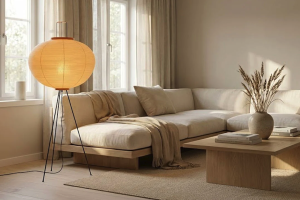
This isn’t just a lamp; it’s a sculptural element that perfectly embodies the soft, inviting glow so central to Japandi style. Its aesthetic and functional qualities make it an indispensable part of your cozy space.
Why It Works for Japandi
The pleated paper shade floor lamp is a match made in heaven for this aesthetic.
- Soft, Diffused Lighting: Harsh overhead lighting is a no-go for coziness. A pleated paper shade gently filters light, creating a warm, ambient glow that softens the whole room. This diffused light eliminates harsh shadows and creates a serene atmosphere.
- Simple, Organic Form: The lamp’s design is inherently minimalist, often featuring a simple base and the elegant, sculptural shade. The pleats add subtle texture and visual interest without being overly decorative.
- Natural Material (Paper): Paper, especially rice paper, is a cornerstone of traditional Japanese design. It’s lightweight, natural, and allows light to pass through beautifully, aligning perfectly with the Japandi emphasis on natural materials.
- Sculptural Element: Even when turned off, the lamp acts as a piece of art. Its unique form can become a focal point, drawing the eye and adding architectural interest to your space.
Choosing Your Pleated Paper Shade Lamp
There’s a surprising variety available, so consider these points when making your selection.
- Size and Scale: Ensure the lamp’s height and width are proportionate to the room and the furniture it’s placed near. A tall, slender lamp might be perfect next to a low-slung sofa, while a wider, more substantial one could anchor a corner.
- Base Material: While the shade is paper, the base can vary. Options include wood (light oak, dark walnut), metal (matte black, brushed brass), or even ceramic. Choose a base material that complements your existing furniture and color palette.
- Pleat Style: Some shades have very fine, sharp pleats, while others have softer, more rounded folds. Consider which style best fits the overall “softness” or “sharpness” you’re aiming for in your design.
- Light Temperature and Brightness: Opt for warm-colored LED bulbs (around 2700K-3000K) to enhance the cozy atmosphere. If possible, choose a lamp with a dimmer switch so you can adjust the brightness to suit different moods and times of day. Multiple light sources at varying heights are key to creating depth and warmth.
Styling Your Japandi Space with Intention
Once you have your key elements, it’s time to bring them all together. Remember, intention and purpose are at the heart of Japandi design.
Mindful Decluttering
Before you place anything, take a critical look at your belongings.
- Keep Only What You Love and Use: This is the core of minimalist living. Remove anything that doesn’t bring you joy or serve a practical purpose.
- Hidden Storage is Your Friend: To maintain clean lines, invest in discreet storage solutions like closed cabinetry, woven baskets, or furniture with built-in storage.
- Clear Surfaces: Avoid cluttering tabletops, shelves, and countertops. A few carefully chosen items are much more impactful than many.
Thoughtful Arrangements
Each item should feel like it belongs and contributes to the overall sense of calm.
- Create Zones: Delineate different areas within a larger room (e.g., a reading nook, a seating area) using rugs, furniture placement, and lighting.
- Symmetry and Asymmetry: While balance is important, it doesn’t always have to be perfectly symmetrical. Sometimes, an asymmetrical arrangement can create more visual interest and a natural feel.
- Layering Textures: This is crucial for adding warmth and depth without adding clutter. Think about a linen sofa with a wool throw, a cotton cushion, and a rattan accent chair.
Bringing in Greenery
Plants are essential for connecting your indoor space with nature.
- Simple, Elegant Plants: Choose plants with clean lines and understated beauty, such as snake plants, fiddle-leaf figs, peace lilies, or bonsai trees.
- Minimalist Planters: Opt for planters in neutral tones like white, black, gray, or unglazed terracotta. Avoid overly ornate or brightly colored pots.
- Strategic Placement: Place plants where they can thrive and where they enhance the aesthetic without overwhelming it. A large plant can be a sculptural element, while smaller plants can add life to a windowsill or shelf. Don’t overdo it; a few well-placed plants are more effective than a jungle.
By combining the serene simplicity of Japanese design with the cozy comfort of Scandinavian aesthetics, and thoughtfully incorporating a pleated paper shade floor lamp, you can truly create a Japandi sanctuary that feels effortlessly stylish and incredibly inviting. It’s about crafting a home that reflects a mindful approach to living, where every element contributes to a sense of peace and well-being.